Power supply on long voyages – figures, data, facts – 2 megawatts of power on Joline
Content
Update to the article Energy supply for blue water yachts – self-sufficient with solar energy alone? and the basics Energy supply from Joline
We have another milestone to celebrate on Joline. Our solar modules installed in Turkey have reached 2.000 kWh of electricity. That's right – the modules have provided us with two megawatt hours so far.
I'd like to take this opportunity to provide interested sailors with detailed figures and experiences that I wish I had at the beginning of my sailing trip. This will be quite numerical, but that's exactly what I intended. This way, you can form your own impressions. If you have any questions about the details, feel free to leave a comment.
First of all, the last few days have been quite overcast, with numerous rain showers, and the sun rarely making an appearance. Nevertheless, there was enough electricity to make water, bake bread, cook electric meals, and run an 8 kg load of laundry. The battery was still fully charged every evening.
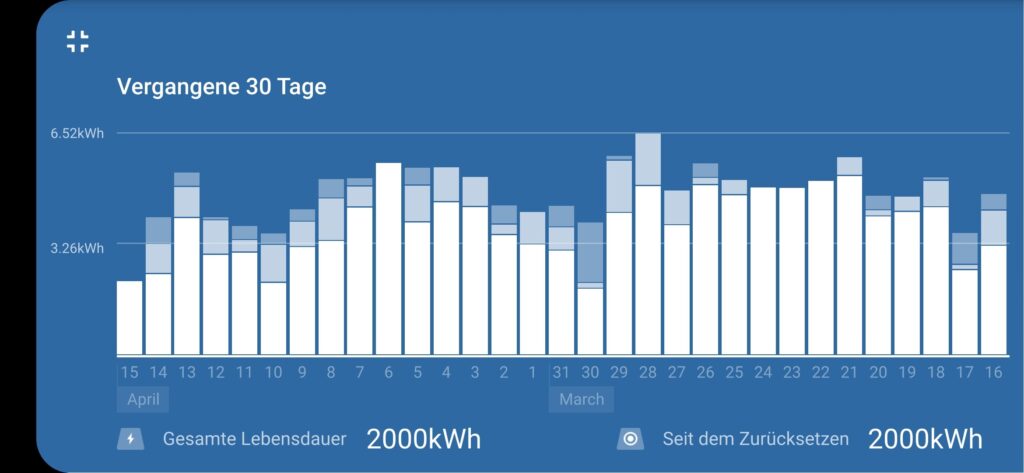
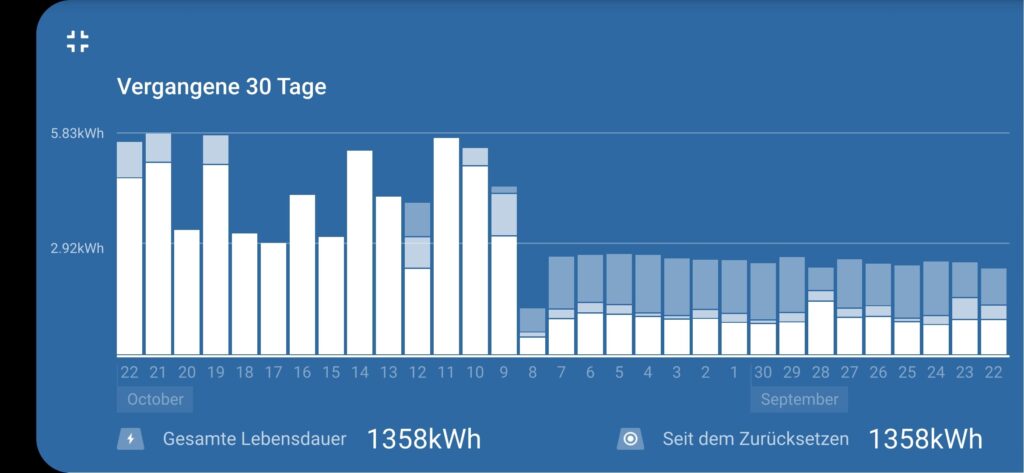
Electricity production of the last 30 days, 2KW peak
Over the past 30 days, we've had both full sun and cloudy days. Despite this, the daily yield remains almost constant. The maximum power the solar panels could have produced cannot be determined from the figures, as the MPPT controllers cut out power as soon as the batteries are full. We consume approximately 6 to 7 kWh of electricity per day.
Rear 3 modules 1.380 watts peak. Installed in Turkey in June 2022
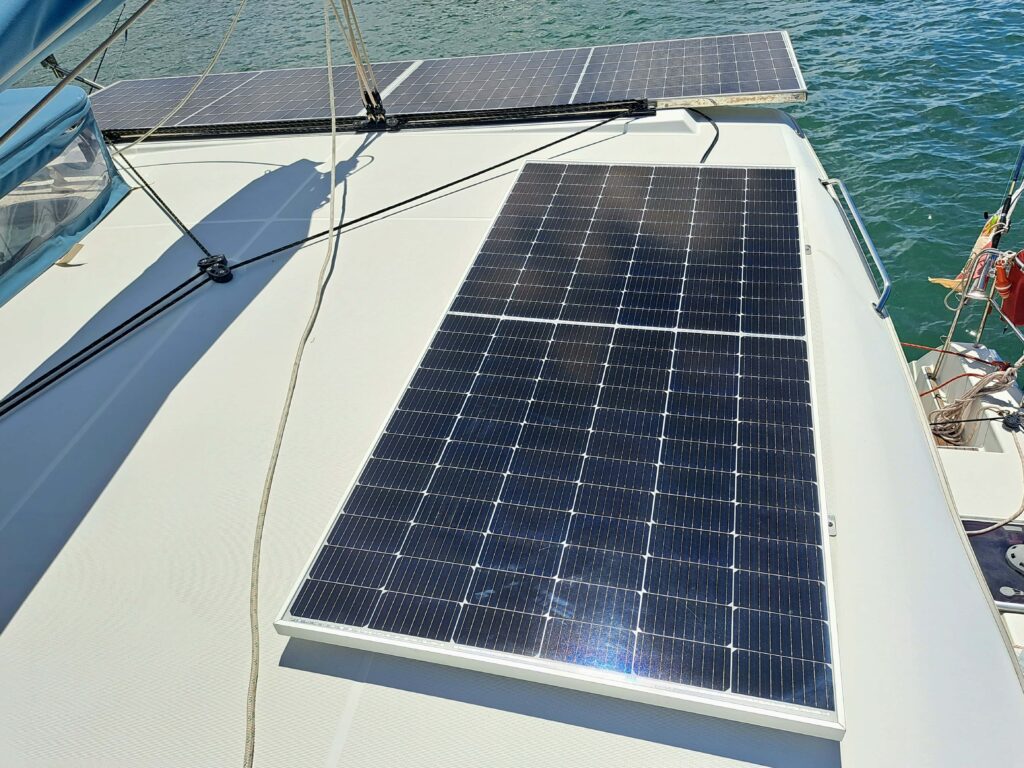
These modules have so far delivered 2 megawatt hours of electricity. The daily yield over the past 30 days has been approximately 5 kWh/day. The peak on March 28th was 6,5 kWh.
Front 2 modules 810 watts peak. Installed in the Canary Islands in October 2023
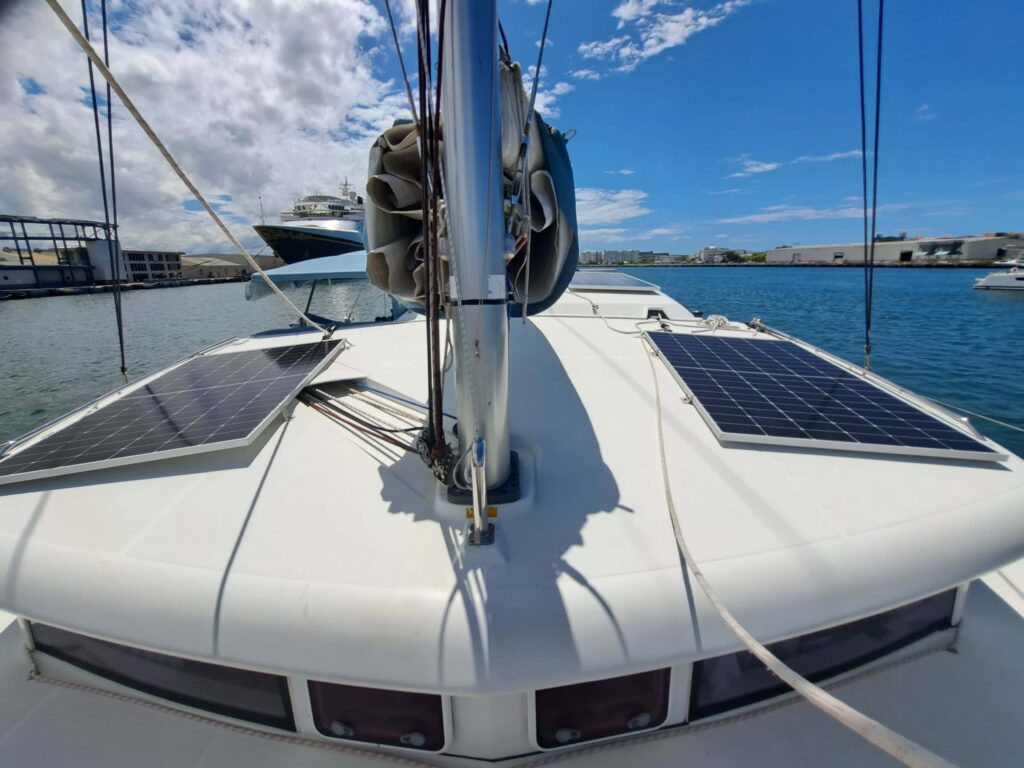
These two modules have generated 292 kWh of electricity since installation in October. The daily yield over the past 30 days has been around 2 kWh/day. Peak production on April 6 was 3.3 kWh.
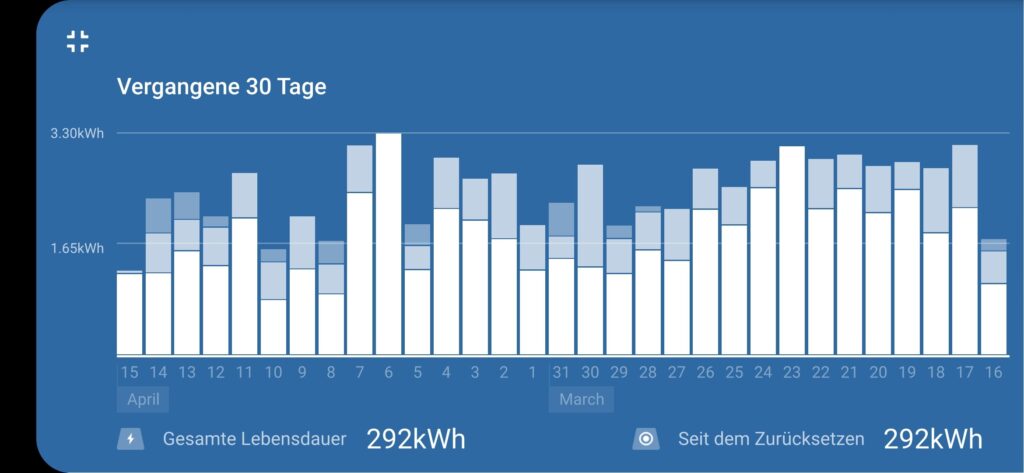
Review Türkiye with 3 modules 1380 Watt Peak
The first 200 kWh – June/July, Türkiye. Daily consumption under 3 kW. Cooking and baking with gas, no Starlink. 3 refrigerators, fully automatic coffee machine, washing machine, water heater.
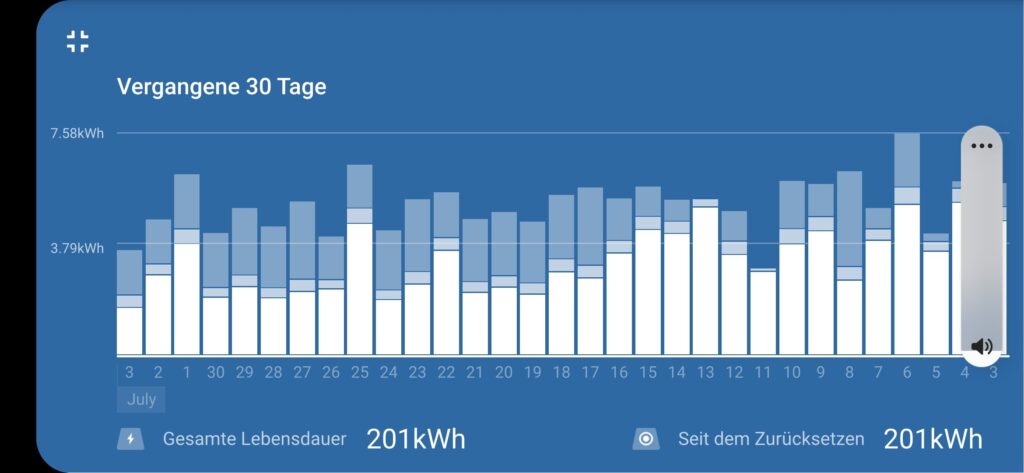
The next 200 kWh. July-August in Turkey. Air conditioning in use for a while, otherwise as before. Consumption 3,5 to 6 kWh (with air conditioning). The increased consumption results from higher average temperatures. The refrigerators require more electricity. Air conditioning is an added luxury.
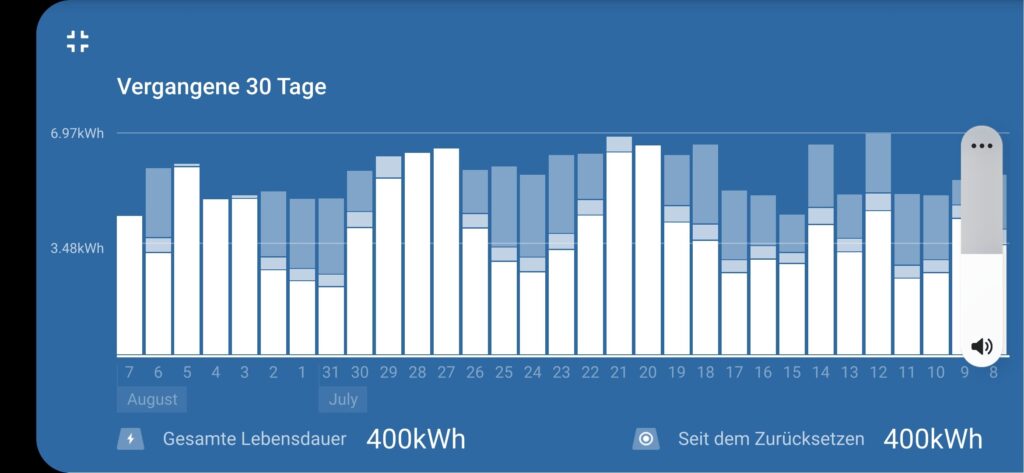
Review Morocco with 3 modules 1380W Peak
June / July 2023. Cooking is electric. Shore excursions in Morocco, therefore less electricity consumption
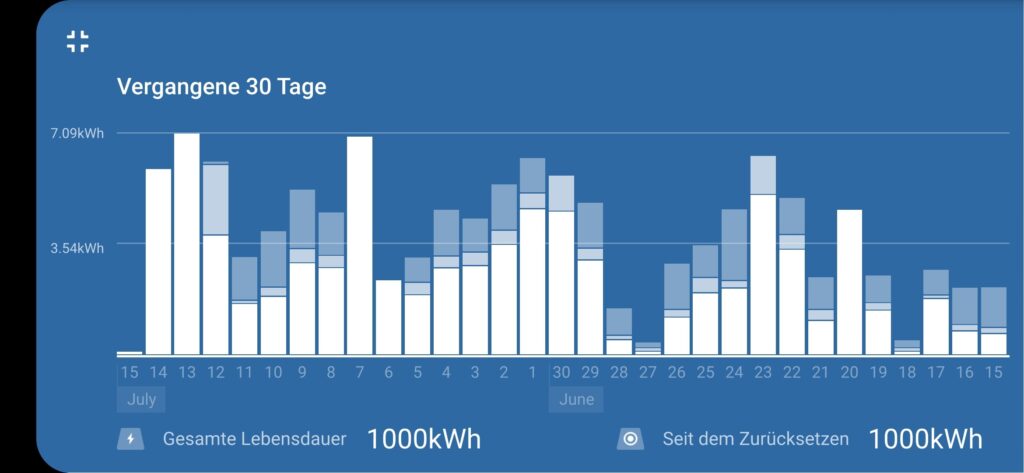
Review Canary Islands 1380W Peak – it’s getting tight
We're moving to the Canary Islands. Shore excursions in September, so only basic refrigerator needs are needed. After that, cooking and baking will be done electrically, and Starlink will be added. The battery is no longer charging at 3 kWh per day. Overcast weather and shorter sunshine hours are causing us to worry.
Caribbean status 2024 and outlook
Expanding our solar system from 1380 WPeak to 2190 WPeak has proven to be a great success for us. We now have more reserves in case we have several days of bad weather, and the shorter sunshine duration is no longer a problem. Another very positive effect is that we now have modules on all sides. This means we produce electricity earlier or later depending on the boat's position, meaning we can produce electricity for longer than before. The issue of module shading is also no longer a problem. We used to have a problem if a tree or mast shaded the modules at the best time. Now there are always at least two modules in full sun.
The following diagrams show the situation in the British Virgin Islands. The weather is overcast, with occasional showers. Nevertheless, the modules begin charging the batteries early in the morning (6 a.m.). The batteries are already fully charged by 12.00 p.m.
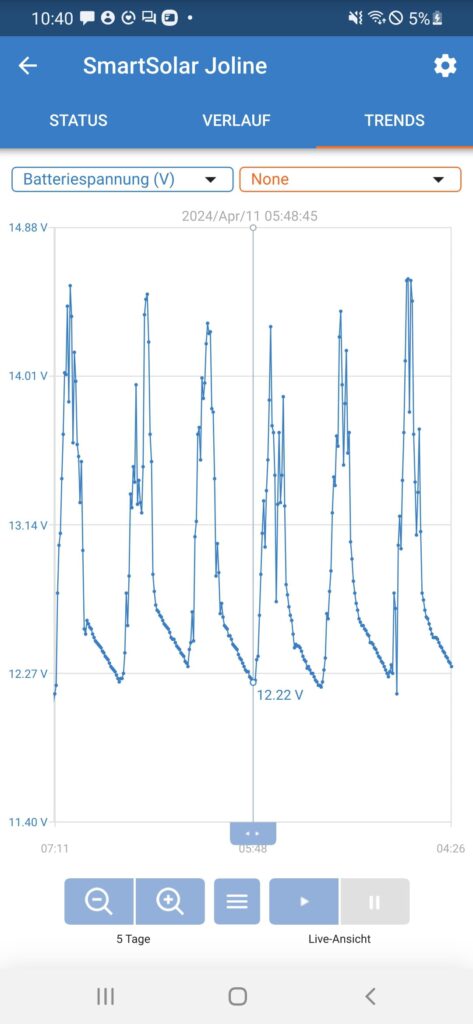
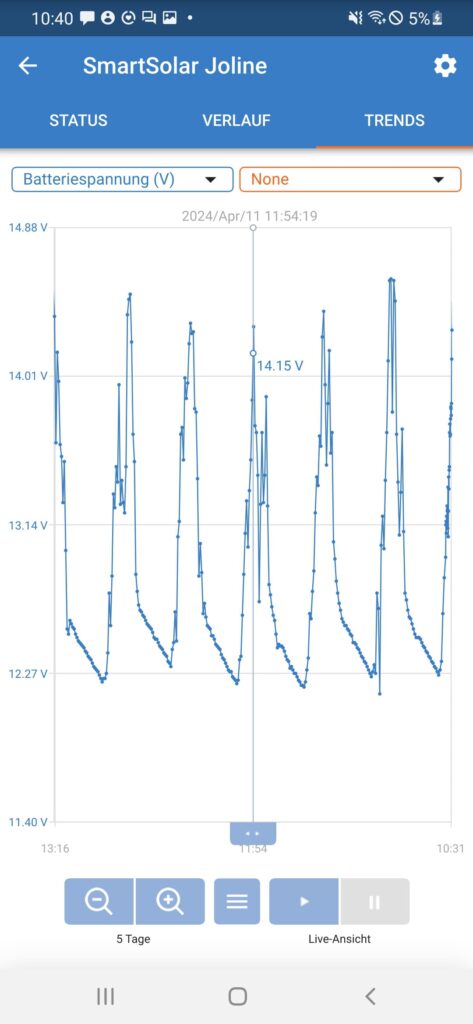
Our battery bank, consisting of seven 7 AH AMG batteries, is starting to show the strain. The voltage drops to just over 140V in the morning before charging begins. That's not sensationally bad, but not exactly great either.
In the US, we'll be switching to LiFePo4 next year. Everything is available there again at reasonable prices.
Insight of the day or lessons learned
Reserves are also beneficial when it comes to energy (management). We've also been on a "journey" here and have let things develop. We'd like to share the following thoughts with you.
- We anticipated from the beginning that Joline's power requirements would increase. Due to costs and component availability, we decided on a phased expansion. Not everything has to happen immediately.
- Switching to electric cooking and baking definitely makes sense for us. BUT we're happy to be able to rely on gas for cooking when there's not enough electricity on crossings.
- Redundancy is key. Both the MPPT and the inverters can fail. You should be prepared for this scenario; the day will come, but when...
- Longer crossings require a particularly large amount of electricity, and generally produce less. It's a good idea to take precautions in advance and, above all, implement appropriate measures in a timely manner. We were too naive about our Atlantic crossing and struggled with empty batteries for days. Pay attention to your consumption and the development of your charge level at the beginning.
FUN FACT: Although we regularly turned on the engine to generate electricity, we only generated 1,5% of the total electricity on the Atlantic crossing with our diesel engines. - The voltage of our AMG batteries drops significantly when they are no longer charged AND high currents are being drawn. Short-term voltage drops caused by a coffee machine or kettle can then lead to instrument failure or the autopilot can suddenly fail. Either avoid large consumers or support the battery by switching on the engine. Converting to LiFePo4 makes sense in this context.
- We'll be doing without other energy sources. Electricity on the boat doesn't come from the socket in unlimited quantities like at home. But you can easily bridge a few rainy days by using your energy consumption habits.
BTW: Next to us here in San Juan, Puerto Rico, we've had a 3-inch mono motor home for three days, with the generator running all day long. It doesn't bother us because it's pleasantly quiet – but I wouldn't want to swap. I'd rather have more solar and conserve electricity a bit every now and then.


Leave a comment
You might like it too...