
Tunisia – World Heritage: The Amphitheater of El Djem – about bread and games and the life of a gladiator
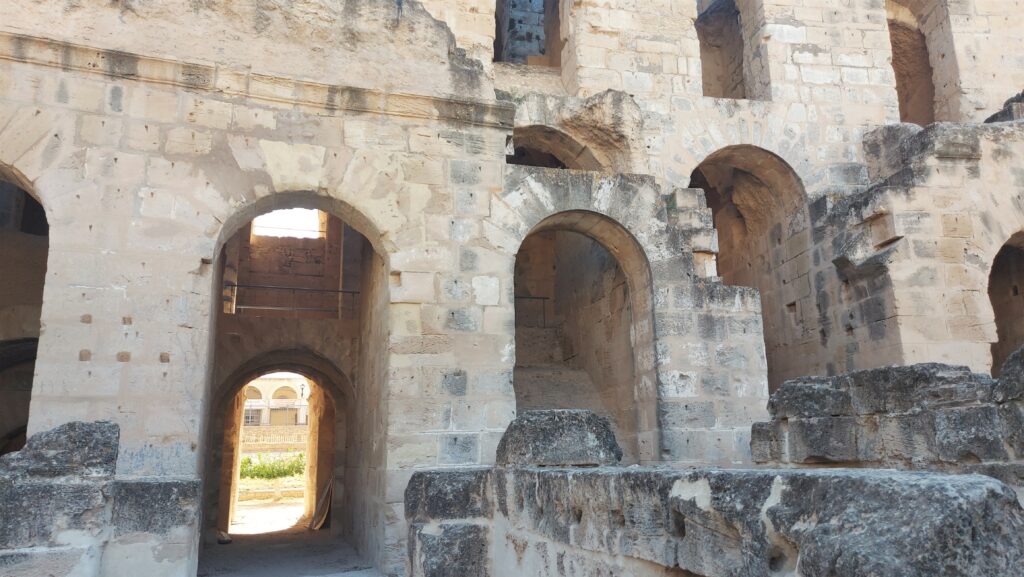
The amphitheater of El Djem is the best preserved in North Africa and the second largest after Carthage.
It was built in 238 AD and modeled after the Colosseum in Rome.
It was built in the Roman city of Thysdrus and had a capacity of 35.000 spectators.
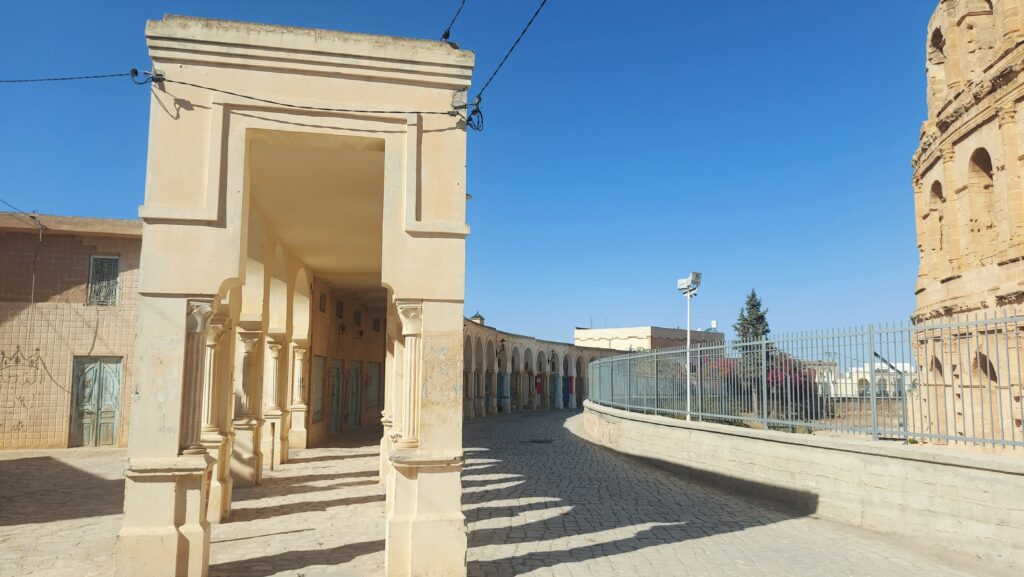


Gladiator fights in the arena were always privately financed and very expensive.
The fighting spectacle, which could last for several days, depended on the financial investment.
There was a fixed procedure:
In the morning the games began with animal fights.
First, harmless animals were allowed into the arena, such as deer and antelopes, which were then hunted and killed with spears by so-called bestiari.
Then came the dangerous animals such as lions, elephants or bears, which either fought against each other or were also hunted by the bestiaries.
Sometimes animal training was also shown
At midday, convicts were executed in the arena – various methods were used for this.
The prisoners were either executed directly or made to fight against dangerous animals (unarmed). It was also popular to let them fight each other until only one remained. However, this person was not pardoned but was ultimately executed as well.
Afterwards, the gladiators were introduced and showed demonstration fights, so-called producio.
During this producio, gladiators fought with blunt or wooden swords in mock battles against each other or against noblemen who wished to show off their skills. Emperors also enjoyed participating in such mock battles.
Sometimes these exhibition fights lasted for several days.

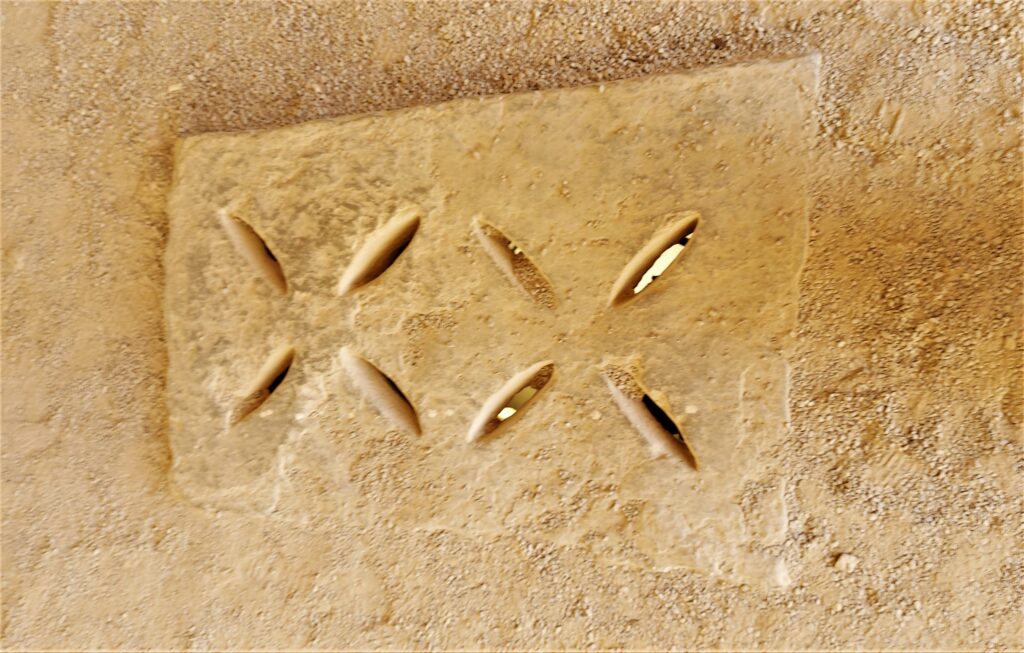
People and animals were transported into the arena through an opening in the floor using lifting devices.
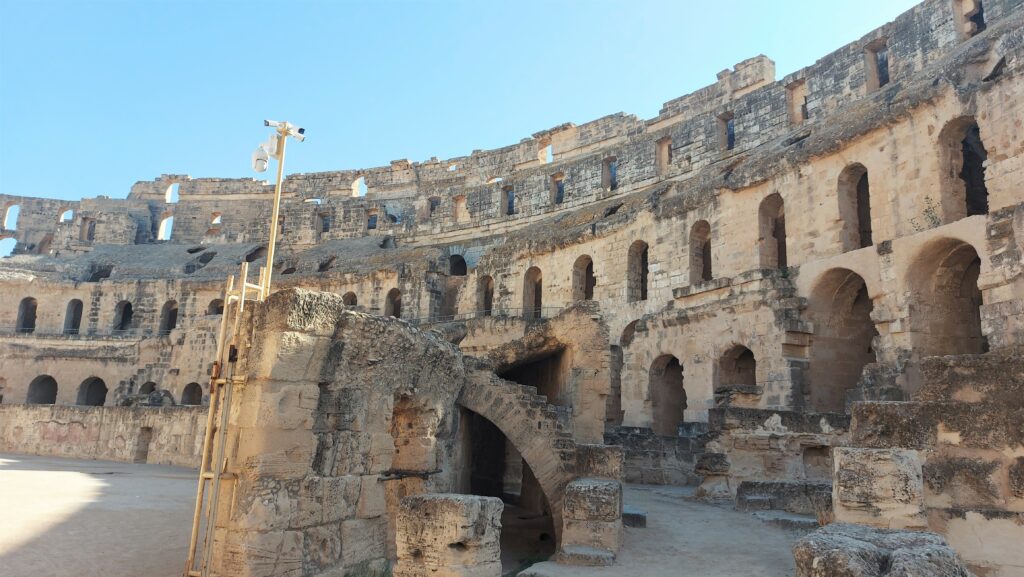
The highlight of the fighting days were the gladiator fights.
These were not uncontrolled massacres, but usually had a referee on site who ensured that everything was done correctly.
Gladiator fights ended in 4 different ways:
- One of the two gladiators fell in battle
- The defeated gladiator surrendered and was executed by the audience's decision
- The defeated gladiator surrendered and was pardoned by the decision of the audience.
- The fight ended in a draw – both gladiators survived the fight
The surviving gladiator left the arena through the Porta Sanavivaria - the gate of health and life - the killed gladiator was wrapped in cloths and carried out of the arena through the gate of Venus Libitina - the goddess of death and burial.
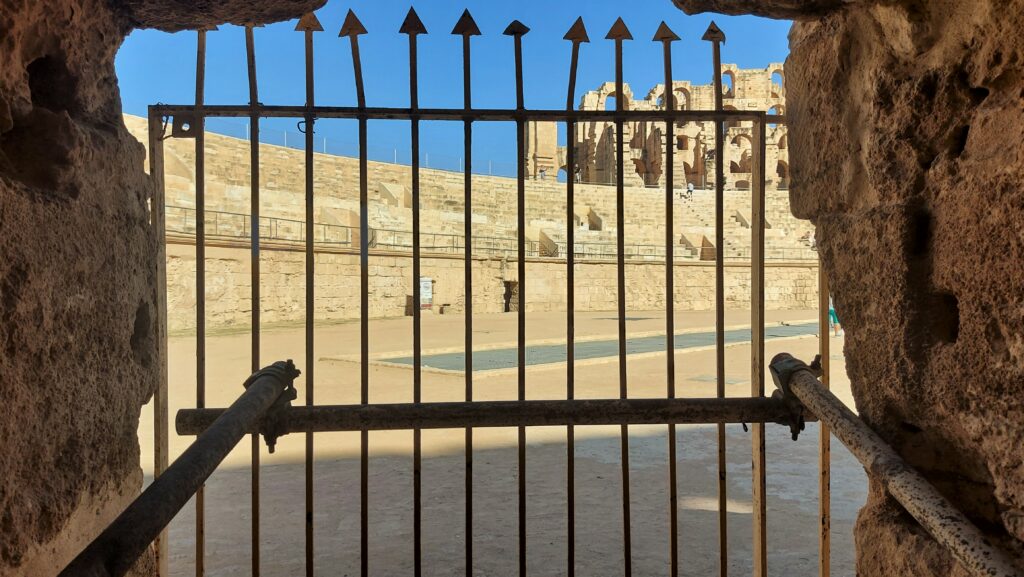
Gate to exit the arena.
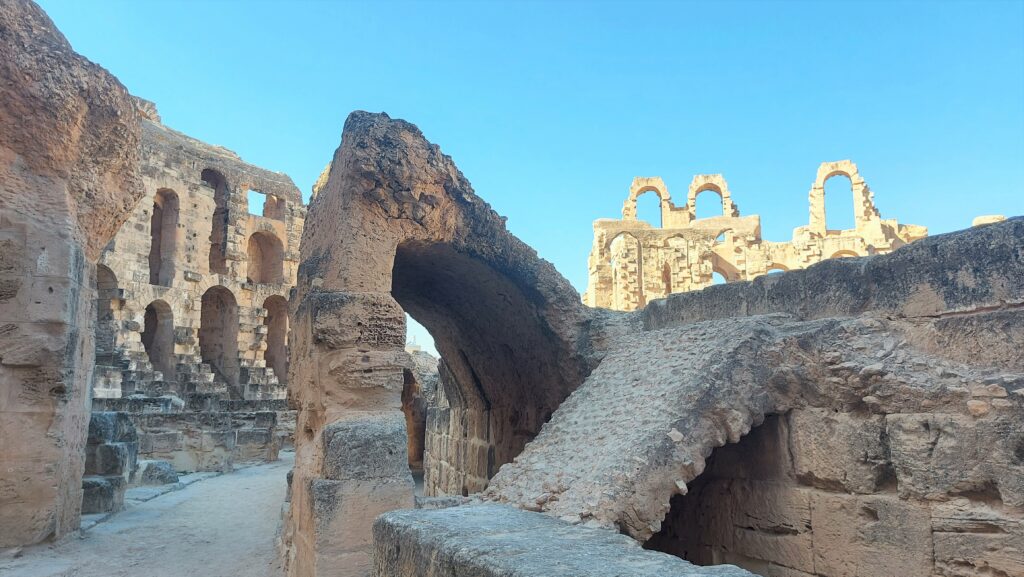
The first gladiators were slaves and prisoners of war. But by the 1st century BC, half of all gladiators were formerly free citizens who had volunteered to become gladiators. Although a gladiator was socially lower than a slave, demand was so high that laws were passed to stem the overwhelming influx.

Why did so many Free Gladiators want to become?
Considering the fact that life expectancy was not that high in Roman times, the life of a gladiator seemed quite attractive.
A gladiator fought about 1-3 times a year – and the chance of survival was not that small.
According to a survey by historian George Ville, about 19 gladiators died out of 200 gladiators who participated in the games.
The life expectancy of gladiators was 18 – 25 years – however, the general life expectancy was only 27 years.
In return, the gladiators led a good life. They were well cared for and looked after by the most famous physicians of their time.
They were trained in gladiatorial schools – the most famous were in Capua – and were able to achieve fame and prestige and share in the prize money.
If they had enough money, they could buy their freedom and then work as bodyguards for noblemen or as instructors in gladiatorial training.


Gladiator fights took place between 264 BC and around the middle of the 5th century AD – they ended due to an imperial ban and were very slow to gain acceptance.

Leave a comment
You might like it too...

Tunisia – a round trip by rental car – November 2022 – Stage 6: Capital Tunis – Medina Tunis – Carthage and the artists’ village of Sidi Bou Said
Tunisia – a round trip by rental car – November 2022 – 5th stage: Sbeitla – El Djem – Port Yasmine Hammamet.
